
Problem Statement
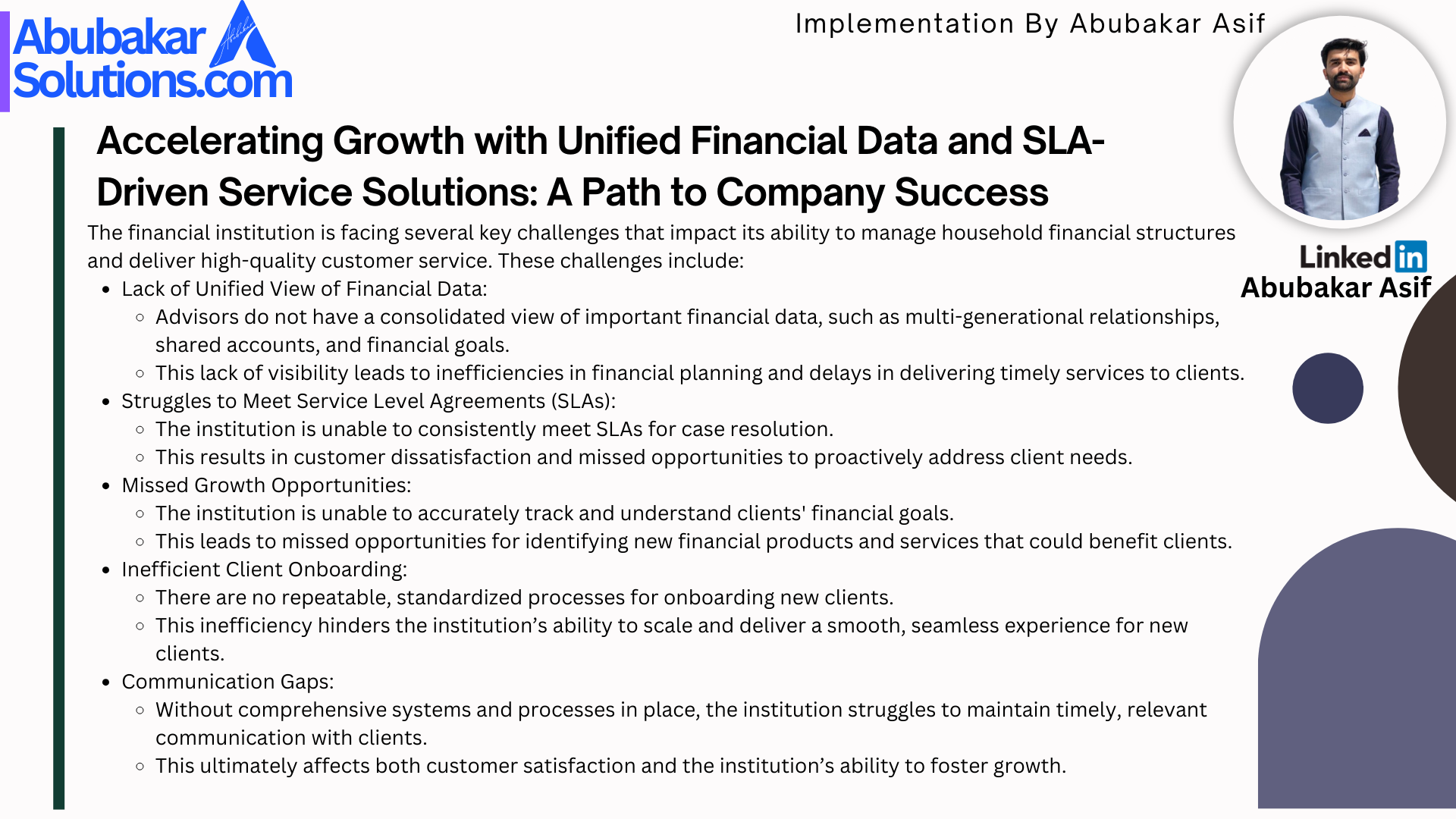
The financial institution is facing several key challenges that impact its ability to manage household financial structures and deliver high-quality customer service. These challenges include:
Lack of Unified View of Financial Data:
Advisors do not have a consolidated view of important financial data, such as multi-generational relationships, shared accounts, and financial goals.
This lack of visibility leads to inefficiencies in financial planning and delays in delivering timely services to clients.
Struggles to Meet Service Level Agreements (SLAs):
The institution is unable to consistently meet SLAs for case resolution.
This results in customer dissatisfaction and missed opportunities to proactively address client needs.
Missed Growth Opportunities:
The institution is unable to accurately track and understand clients’ financial goals.
This leads to missed opportunities for identifying new financial products and services that could benefit clients.
Inefficient Client Onboarding:
There are no repeatable, standardized processes for onboarding new clients.
This inefficiency hinders the institution’s ability to scale and deliver a smooth, seamless experience for new clients.
Communication Gaps:
Without comprehensive systems and processes in place, the institution struggles to maintain timely, relevant communication with clients.
This ultimately affects both customer satisfaction and the institution’s ability to foster growth.
Proposed Solution
To address these challenges, the financial institution should implement a comprehensive solution leveraging Salesforce Financial Services Cloud (FSC) and other integrated technologies. This solution focuses on enhancing financial planning, improving case resolution times, identifying new growth opportunities, and streamlining client onboarding. Key elements of the solution include:
- Consolidated Financial Data
- Efficient Case Resolution
- Client Goal Tracking and Opportunity Creation
- Standardized Action Plan Templates
- Improved Client Interaction Management
Implementation
1) Consolidated Financial Data:
Leverage Salesforce FSC’s Household Data Model: Map family relationships, financial accounts, and shared goals using the robust household data model. This will provide a unified view of the household’s financial structure, facilitating better decision-making and personalized financial advice.


2) Efficient Case Resolution:
SLA Tracking and Automated Case Escalation: Implement SLA tracking and automated case escalation workflows to ensure that service requests are resolved within the defined timelines, preventing delays and improving customer satisfaction.
Omni-Channel Case Management: Enable Omni-Channel Routing to assign service requests to the right teams, ensuring that cases are handled by the most suitable agents based on expertise and availability.


3) Client Goal Tracking and Opportunity Creation:
Financial Plans and Goals: The use of Financial Goals will allow the institution to track clients’ short- and long-term financial objectives. With real-time tracking of progress and feasibility, the institution can identify gaps in clients’ plans and create new opportunities to help clients achieve their financial goals.


4) Improved Client Interaction Management:
Interaction Summaries: Interaction Summaries will enable advisors to capture structured, actionable notes from every client interaction. This will ensure that key insights are documented and available for future engagements, enhancing the quality of customer service and enabling more personalized interactions.


5) Standardized Action Plan Templates:
Reusable Action Plan Templates: Action plan templates will be created to streamline business processes, especially for client onboarding. These templates will define tasks, document checklists, and timelines for completing each step in the process. Standardizing these workflows will ensure consistency, efficiency, and a better experience for both clients and staff.


By implementing these key elements, the financial institution will enhance its ability to provide timely, personalized service, resolve cases efficiently, and create new opportunities for growth. This solution will streamline operations, improve customer satisfaction, and ensure that advisors are equipped with the right tools to serve clients effectively.
For More Projects & Implementations
-
Use Case: One AI Assistant, Two Memories — How an Insurance Broker Settled the RAG vs CAG War
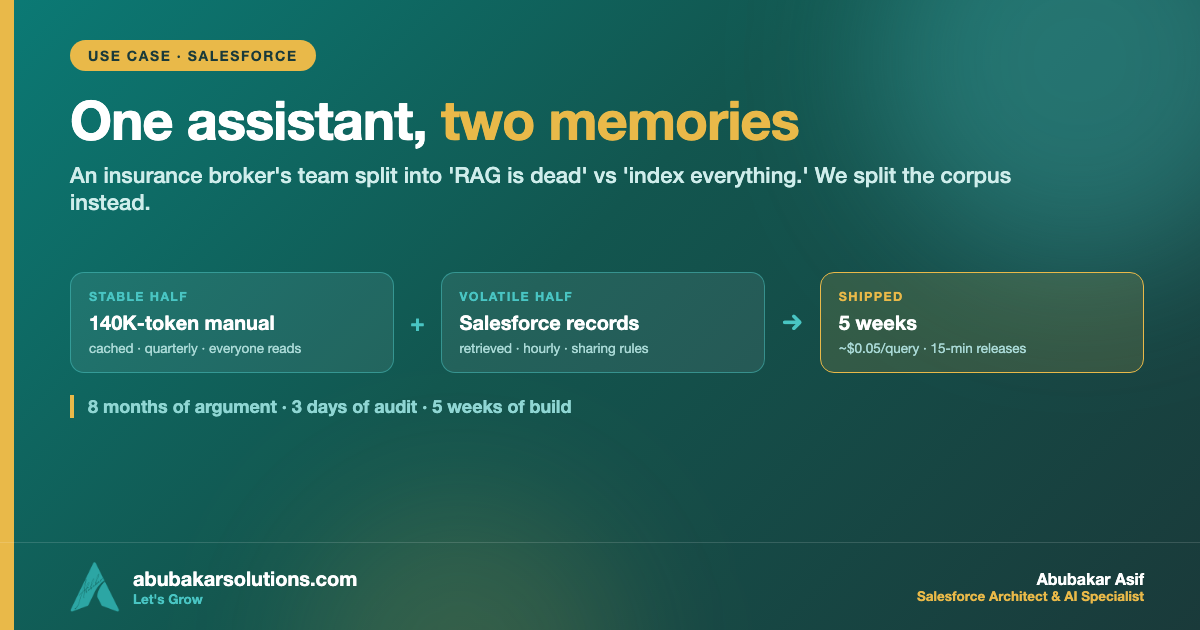
Their team split into ‘RAG is dead’ vs ‘index everything.’ We split the corpus instead: cached underwriting manual, retrieved live records. The numbers.
-
Cache the Stable, Retrieve the Volatile: A Decision Framework for RAG, CAG, and Hybrid

When to load the whole knowledge base into context, when to retrieve, and the hybrid prompt that does both — a decision framework with real thresholds.
-
RAG vs CAG in 2026: What the Paper Actually Says, and What Everyone Misquotes
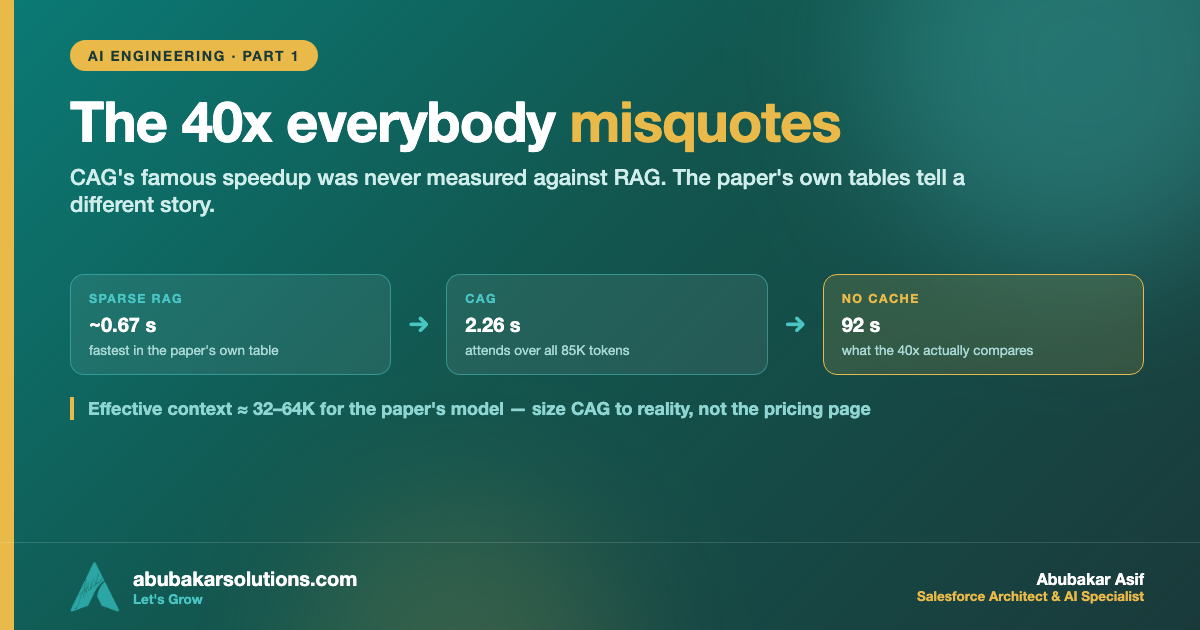
CAG’s famous 40x speedup isn’t over RAG — it’s over uncached prompting. The real numbers, the long-context evidence, and the honest comparison.